
Table of Contents
ToggleGhost of Tsushima examples showcase why Sucker Punch Productions created one of the most visually striking and emotionally powerful games of recent years. Released in 2020, this action-adventure title drops players onto Tsushima Island during the first Mongol invasion of Japan in 1274. The game blends samurai combat, stealth mechanics, and open-world exploration into an experience that feels both cinematic and deeply personal.
What makes Ghost of Tsushima stand out? The answer lies in its countless memorable moments, from breathtaking landscapes to brutal sword duels. This article breaks down the best Ghost of Tsushima examples across exploration, combat, storytelling, and visual design. Whether someone is considering their first playthrough or looking to revisit favorite scenes, these highlights capture what makes the game special.
Key Takeaways
- Ghost of Tsushima examples of open-world design include the innovative guiding wind system that keeps players immersed without intrusive UI elements.
- Combat highlights like standoffs, the four-stance system, and intense one-on-one duels deliver some of the most satisfying samurai gameplay experiences.
- The game’s storytelling shines through personal relationships, including Jin’s fractured bond with Lord Shimura and emotionally charged side characters like Lady Masako.
- Mythic Tales offer standout optional content, rewarding players with legendary abilities and unique gear through challenging quests.
- Photo mode provides powerful tools for capturing cinematic shots, including Kurosawa Mode’s black-and-white film tribute to classic samurai cinema.
- From golden forests to bamboo challenges, Ghost of Tsushima examples of exploration reward players with both visual beauty and practical upgrades.
Stunning Open World Exploration Examples
Ghost of Tsushima examples of open-world design set a new standard for the genre. The island of Tsushima stretches across three distinct regions, each packed with unique biomes and hidden secrets.
The guiding wind system stands as one of the game’s smartest design choices. Instead of cluttering the screen with waypoints or mini-maps, players swipe up on the touchpad to summon a gentle breeze. This wind physically moves through the grass and trees, pointing toward the next objective. It keeps players immersed in the world rather than staring at UI elements.
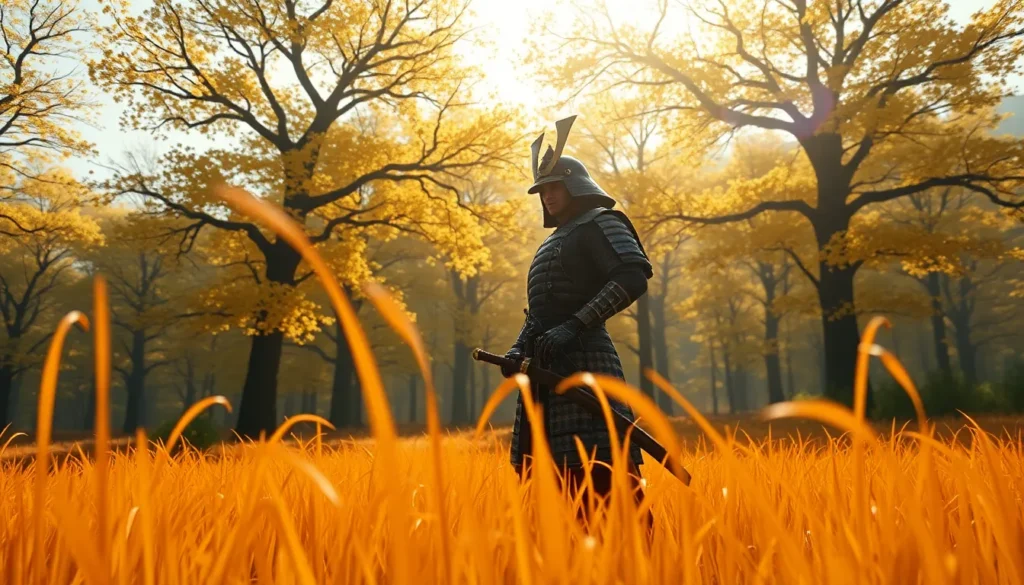
Golden Forest offers one of the most photographed locations. Towering trees drop yellow leaves that blanket the ground, creating scenes that look like paintings. Riding through this area on horseback while leaves swirl around Jin feels genuinely magical.
Another memorable Ghost of Tsushima example involves following foxes to hidden shrines. These small creatures appear throughout the island. When players spot one, they can follow it through bushes and over rocks to discover Inari Shrines. Each shrine grants a charm slot, rewarding exploration with practical upgrades.
Hot springs dot the landscape and serve as both rest points and reflection moments. Jin sits in the steaming water while players choose what he contemplates, his father, his uncle, or his mission. These quiet scenes add emotional depth between action sequences.
The bamboo strikes challenge players to press button sequences with precise timing. Completing these tests increases Jin’s resolve, which powers special abilities. They’re scattered across the map, giving explorers reasons to venture off the main path.
Combat and Swordplay Highlights
Combat delivers some of the best Ghost of Tsushima examples of satisfying gameplay. The sword fighting feels weighty and lethal. Most enemies die in just a few hits, but so does Jin if players get careless.
Standoffs represent peak samurai fantasy. Jin approaches a group of enemies and challenges one to single combat. Time slows as both warriors stare each other down. The player holds the attack button and releases it the instant the enemy moves. A perfect standoff cuts down the opponent in one strike. Upgrading this ability lets Jin chain kills on multiple enemies who rush in after.
The stance system adds tactical depth to every encounter. Jin learns four fighting stances throughout the game. Stone stance works best against swordsmen. Water stance breaks through shields. Wind stance handles spearmen effectively. Moon stance crushes brutes. Switching between stances mid-fight becomes essential during battles with mixed enemy types.
Ghost of Tsushima examples of stealth combat show Jin’s darker side. He can throw kunai, plant sticky bombs, and assassinate enemies from behind. Using these “dishonorable” tactics conflicts with samurai tradition but proves necessary against overwhelming Mongol forces.
One particularly intense Ghost of Tsushima example occurs during duels. These one-on-one boss fights strip away gadgets and stealth options. Jin faces skilled opponents in isolated arenas, often beautiful meadows or burning villages. Players must read attack patterns, parry precisely, and strike at openings. The duel against Ryuzo in the burning watchtower remains a fan favorite for its emotional weight and visual spectacle.
Standout Story and Character Moments
Ghost of Tsushima examples of storytelling hit hard because they focus on personal sacrifice and identity. Jin Sakai begins the game as a devoted samurai who follows his uncle’s code without question. By the end, he’s made choices that change him forever.
The relationship between Jin and Lord Shimura drives the narrative. Shimura raised Jin after his father’s death. He represents honor, tradition, and the samurai way. When Jin starts using poison and assassination, tactics Shimura considers cowardly, their bond fractures. Their scenes together carry genuine tension.
Lady Masako’s storyline provides some of the game’s most emotional Ghost of Tsushima examples. She’s a warrior seeking revenge for her murdered family. Her tale of mourning and vengeance reveals layers of tragedy as players help her track down those responsible. The final revelation in her quest hits unexpectedly hard.
Sensei Ishikawa trains Jin in archery while hunting his former student, Tomoe. Their missions explore themes of mentorship, betrayal, and redemption. Ishikawa’s guilt over creating a skilled enemy drives his arc forward.
Yuna serves as Jin’s closest ally throughout the main story. She’s a thief who saves Jin’s life early on. Her pragmatic approach to survival influences Jin’s transformation into the Ghost. Their friendship feels earned through shared danger and mutual respect.
Mythic Tales and Side Quest Examples
Mythic Tales rank among the finest Ghost of Tsushima examples of optional content done right. These special quests send Jin chasing legends to acquire supernatural abilities and unique gear.
The Tale of the Heavenly Strike tasks Jin with finding a legendary technique. He follows clues across the island, eventually facing a master swordsman in a duel. Winning grants the Heavenly Strike, a devastating unblockable attack that becomes a combat staple.
Another standout Mythic Tale involves the Six Blades of Kojiro. Jin must defeat six ronin across Tsushima, each with distinct fighting styles. After beating all six, he challenges their leader Kojiro in an intense final duel. Victory rewards the Kensei armor set.
The Curse of Uchitsune sends Jin searching for a legendary bow. This quest features platforming sections through mountainous terrain and culminates in acquiring a weapon that fires guided arrows. It’s Ghost of Tsushima at its most fantastical.
Beyond Mythic Tales, regular side quests flesh out island life. Peasants need help defending their farms. Monks request assistance recovering stolen artifacts. Each quest reveals more about the Mongol occupation’s impact on ordinary people.
Liberation missions let Jin free occupied areas by defeating enemy leaders and destroying war supplies. Completing these activities gradually pushes back the invasion and opens up fast travel points across the map.
Photo Mode and Visual Examples
Ghost of Tsushima examples of photo mode creativity flood social media for good reason. The game provides exceptional tools for capturing cinematic shots.
Players can adjust time of day, weather conditions, wind intensity, and particle effects. Want a dramatic shot of Jin silhouetted against a sunset? Set the sun position. Prefer a moody scene with rain streaking across the frame? Add precipitation. The control feels comprehensive without overwhelming newcomers.
Kurosawa Mode transforms the entire game into a black-and-white film with added film grain. This visual filter pays tribute to legendary director Akira Kurosawa, whose samurai films inspired the game. Playing through the story in this mode creates a distinctly different atmosphere.
Many Ghost of Tsushima examples shared online capture Jin mid-combat. The photo mode freezes action instantly, letting players rotate the camera to find the perfect angle on a sword swing or parry. Adding depth of field blur focuses attention on Jin while softening backgrounds.
Nature shots showcase the game’s environmental art. Fields of white pampas grass waving in wind, autumn leaves floating across ponds, and cherry blossoms drifting through village streets all make stunning subjects.
The game even includes music tracks that play during photo mode, helping set the mood while players compose their shots. It’s a small touch that shows how much care went into every feature.


