
Table of Contents
ToggleGhost of Tsushima tools transform Jin Sakai from a skilled samurai into a deadly force of nature. These weapons let players approach combat with creativity and strategy beyond traditional sword fighting. Whether players prefer stealth assassinations or explosive confrontations, the right tools make every encounter more satisfying.
The game offers a variety of Ghost weapons that unlock progressively throughout the story. Each tool serves a specific purpose, from distracting enemies to dealing massive damage. Mastering these tools separates good players from great ones. This guide covers everything players need to know about Jin’s arsenal, including how to unlock each weapon, upgrade paths, and the best combinations for different situations.
Key Takeaways
- Ghost of Tsushima tools include throwable items like kunai and bombs, plus deployable devices like smoke bombs and firecrackers.
- Kunai serve as the most versatile tool, capable of killing weaker enemies, staggering armored foes, and hitting multiple targets when upgraded.
- Smoke bombs provide essential defensive utility by breaking enemy line of sight and restoring health when upgraded.
- Tools unlock through story progression—kunai and smoke bombs in Act 1, with sticky bombs available later in Act 2.
- Upgrading Ghost of Tsushima tools requires supplies from liberating territories and predator hides from hunting dangerous animals.
- Combine tools strategically based on your playstyle: stealth players should prioritize kunai and wind chimes, while aggressive players benefit from bomb loadouts.
Understanding the Ghost Weapons System
The Ghost weapons system in Ghost of Tsushima represents Jin’s departure from honorable samurai combat. His uncle, Lord Shimura, views these tactics as dishonorable. But desperate times call for desperate measures against the Mongol invasion.
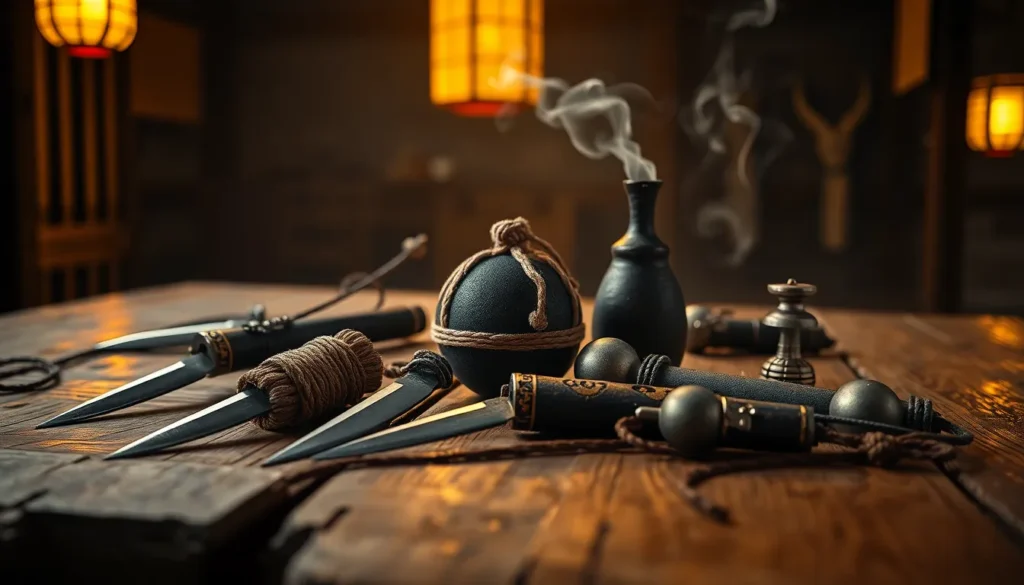
Ghost of Tsushima tools fall into two main categories: throwable items and deployable devices. Throwable items include kunai, bombs, and wind chimes. Deployable devices cover things like smoke bombs and firecrackers. Players can equip up to four tools at once using the quick-select menu.
The game introduces new tools through story missions and side quests. Some weapons become available early, while others require significant story progression. Players earn supplies and other resources to upgrade these tools by exploring the island and completing activities.
Each tool has a limited supply that refills through various methods. Players can find ammunition scattered throughout the world, purchase supplies from merchants, or craft items at specific locations. Managing tool supplies becomes important during extended combat sequences or infiltration missions.
The Ghost stance itself represents the ultimate expression of this system. After terrorizing enough Mongols, Jin can enter a special stance that instantly kills enemies with fear-inducing strikes. Ghost of Tsushima tools and the Ghost stance work together to create a powerful stealth-action experience.
Essential Combat Tools and How to Use Them
Jin’s toolkit expands significantly as players progress through the main story. Each Ghost of Tsushima tool offers unique tactical advantages in different situations.
Kunai
Kunai serve as Jin’s most versatile throwing weapons. These small blades deal moderate damage and can hit multiple enemies when upgraded. Players can throw kunai quickly without breaking stealth if they remain hidden.
The basic kunai kills weaker enemies outright. Against armored foes, kunai stagger them and interrupt attacks. This creates openings for follow-up sword strikes. Upgraded kunai can hit up to three targets simultaneously, making them excellent for crowd control.
Players should use kunai to finish off wounded enemies or interrupt dangerous attacks. They work especially well against archers and other ranged threats that stay outside sword range.
Smoke Bombs
Smoke bombs provide Jin’s best defensive and escape tool. Throwing a smoke bomb creates a cloud that breaks enemy line of sight instantly. Enemies lose track of Jin and enter a searching state.
During smoke cover, Jin can perform stealth kills on disoriented enemies. Upgraded smoke bombs restore health when deployed, making them valuable in tough fights. The cloud also provides cover for retreating and repositioning.
Smoke bombs shine during open combat when Jin faces overwhelming numbers. A quick smoke bomb gives players time to thin enemy ranks with assassinations before resuming direct combat.
Sticky Bombs and Black Powder Bombs
Explosives offer the highest damage potential among Ghost of Tsushima tools. Sticky bombs attach to surfaces or enemies before detonating. Black powder bombs explode on impact and deal area damage.
Sticky bombs work best against grouped enemies or high-value targets. Players can attach them to walls near patrol routes for ambush opportunities. The delayed fuse allows Jin to retreat to safety before the explosion.
Black powder bombs provide immediate destruction. They clear groups of enemies quickly and deal significant damage to leaders and brutes. But, explosions alert every nearby enemy, so players should use them when stealth is no longer an option.
Both bomb types become essential against Mongol war camps and fortifications. The destruction they cause softens defenses before Jin engages in sword combat.
How to Unlock and Upgrade Your Tools
Ghost of Tsushima tools unlock through story progression and specific side content. The game gates certain weapons behind main missions to ensure players learn mechanics gradually.
Kunai become available early in Act 1 after Jin begins learning Ghost tactics. Smoke bombs unlock shortly after through a story mission with Yuna. Black powder bombs require completing missions with Taka, the blacksmith. Sticky bombs unlock later in Act 2.
Upgrading tools requires two main resources: supplies and predator hides. Supplies come from liberating Mongol territories, completing side missions, and exploring points of interest. Predator hides drop from hunting bears, boars, and other dangerous animals across Tsushima.
Each tool has multiple upgrade tiers that improve different aspects. Kunai upgrades increase damage and add multi-target throws. Smoke bomb upgrades extend cloud duration and add healing properties. Bomb upgrades boost damage radius and carrying capacity.
Players should prioritize upgrading tools that match their playstyle. Stealth-focused players benefit most from kunai and smoke bomb upgrades. Aggressive players should invest in bomb upgrades for maximum destruction.
The Pillar of Honor in each region tracks upgrade progress and shows requirements for the next tier. Visiting trappers and merchants helps identify what resources players still need.
Best Tool Combinations for Different Playstyles
Ghost of Tsushima tools work best when combined strategically. Different loadouts suit different approaches to combat and infiltration.
Stealth Assassin Build: Equip kunai, smoke bombs, wind chimes, and firecrackers. Wind chimes lure enemies to specific locations for easy assassinations. Smoke bombs provide escape options when detection occurs. Kunai eliminate isolated targets silently. This setup lets players clear entire camps without raising alarms.
Aggressive Ghost Build: Load up with sticky bombs, black powder bombs, kunai, and smoke bombs. Open encounters by throwing bombs into enemy groups. Use kunai to finish survivors. Smoke bombs provide healing and repositioning during intense fights. This approach maximizes damage output.
Balanced Warrior Build: Carry kunai, smoke bombs, one bomb type, and wind chimes. This loadout handles any situation effectively. Players can start encounters with stealth, then switch to direct combat when needed. The variety ensures players always have appropriate tools available.
Terrain also affects tool choices. Forest areas favor stealth tools since cover is abundant. Open fields benefit from explosives that can hit grouped enemies. Fortified positions require smoke bombs to bypass chokepoints.
Players should experiment with different Ghost of Tsushima tools combinations throughout their playthrough. The game rewards creativity and adaptation. What works against one enemy type may fail against another.


